
Septic Tank Pumping in Kalispell & the Flathead Valley
Routine pump-outs, inspections for home sales, and help with backups, from Whitefish to Bigfork. Clear prices up front and licensed local crews.
- Upfront price before anyone drives out
- Lids located and baffles checked on every pump-out
- Homes, cabins, and lake properties
- Call, text, or book online
Get a free quote
Tell us what's going on. You'll get a call or text back with a price and the next opening.
Septic services
Most calls are routine pumping. The rest are home sales, problems found during pumping, or a backup that can't wait.
Septic tank pumping
Full pump-out of every compartment, with a check of the baffles, inlet, and outlet.
Typically $350 to $600Pumping details →Inspections for home sales
Pump, inspect, and document the system for buyers, sellers, and lenders.
Typically $250 to $600Inspection details →Repairs, lids, and risers
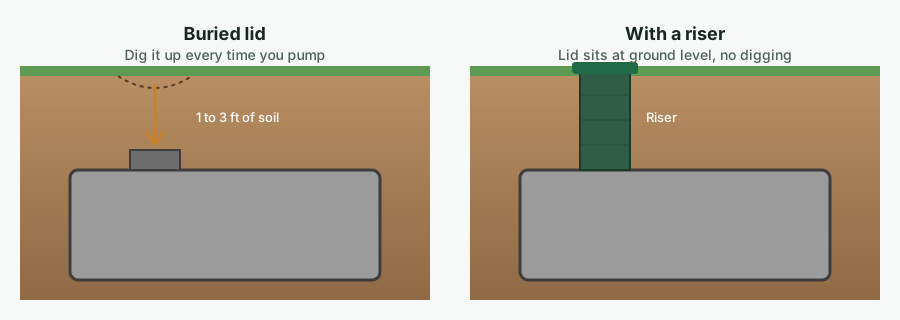
Broken baffles, cracked lids, clogged filters, and risers so you never dig again.
Typically $200 to $800Repair details →Backups and urgent calls
Sewage in the house or yard. Say it's urgent when you call or text.
Call or text nowWhat to do right now →Drain field problems
Soggy ground, odors, or slow drains even after pumping.
Diagnosis firstDrain field details →Cabins and lake homes
Seasonal homes around Flathead Lake, Whitefish Lake, and the North Fork.
Book before you open or closeService areas →How your septic system works
Everything that goes down a drain in your house flows to the septic tank. Inside, heavy solids sink to the bottom as sludge, and grease and oils float to the top as scum. The clearer liquid in the middle flows out to the drain field, where the soil filters it.
Bacteria break down some of the solids, but not all of them. Sludge and scum build up every year. Pumping removes them before they reach the outlet and get pushed into the drain field. That's the whole point of routine pumping: a few hundred dollars every few years protects a drain field that costs thousands to replace.
What happens during a pump-out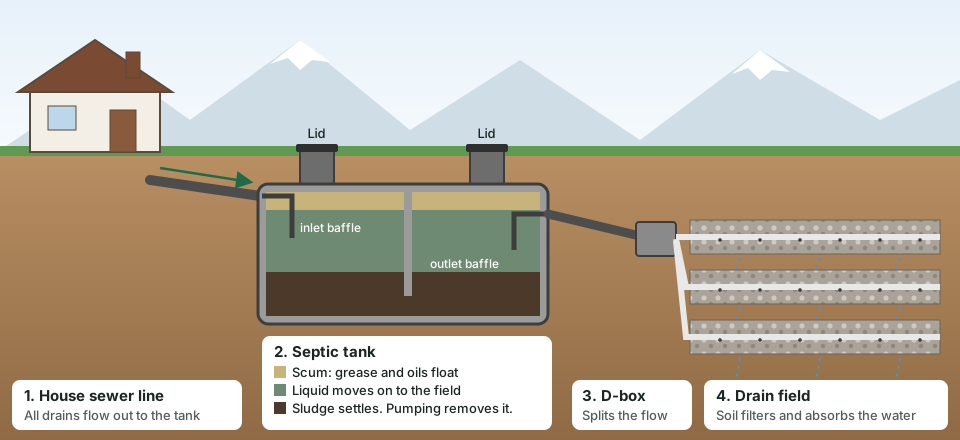
Signs your tank needs pumping
Don't wait for a backup. Any of these is a reason to call.
Slow drains everywhere
One slow sink is a clog. Every drain slowing down at once usually means the tank is full.
Gurgling pipes
Gurgling toilets or tubs after a flush or a load of laundry point to a tank or line that can't keep up.
Sewage smell
Odors near the tank, the drain field, or inside the house are a warning sign.
Green or soggy grass
Extra-green stripes or standing water over the drain field mean effluent is surfacing.
Water backing up
Water in the lowest drain, like a basement floor drain or shower, needs attention now.
You can't remember
If nobody knows when it was last pumped, it's due. That's the most common call.
How often to pump, by tank size
Not sure of your tank size? Most homes built in the valley have 1,000 to 1,500 gallon tanks. The pumping receipt will list it after your first visit.
| Tank size | 1 to 2 people | 3 to 4 people | 5 to 6 people |
|---|---|---|---|
| 750 gallons | Every 4 to 6 years | Every 2 to 3 years | Every 1 to 2 years |
| 1,000 gallons | Every 5 to 8 years | Every 3 to 4 years | Every 2 to 3 years |
| 1,250 gallons | Every 6 to 10 years | Every 4 to 5 years | Every 3 to 4 years |
| 1,500 gallons | Every 8 to 12 years | Every 5 to 6 years | Every 3 to 5 years |
Rough guide for full-time homes. A garbage disposal, a water softener that backwashes into the tank, or heavy laundry use all shorten the interval. Seasonal cabins usually stretch it.
How it works
Tell us about the property
Call, text, or send the form with your town and what's going on. A photo of the lid or the problem helps.
Get a price and a time
You'll get a call or text back with a price range for your tank and the next available opening.
The tank gets pumped
The crew finds and opens the lids, pumps every compartment, and checks the baffles, inlet, and outlet.
You get a written summary
Tank size, sludge level, anything worth watching, and when you'll likely need it pumped again.
Typical prices
Written up front so you can budget before anyone shows up.
| Service | Typical Flathead Valley range | What changes the price |
|---|---|---|
| Pump a 1,000 gallon tank | $350 to $600 | Distance, access for the truck, and whether the lids are exposed |
| Pump a 1,250 to 1,500 gallon tank | $450 to $750 | Tank size and number of compartments |
| Locate and dig up buried lids | $100 to $300 extra | Depth, frozen ground, landscaping over the lid |
| Install a riser | $300 to $800 | Depth to the tank and riser material |
| Inspection for a home sale | $250 to $600 | Whether pumping and a camera check are included |
| Baffle or outlet filter repair | $200 to $600 | Parts and how hard it is to reach |
| Line jetting or camera inspection | $200 to $500 | Length of line and access points |
| Drain field repair or replacement | $3,000 to $20,000+ | Soil, system type, permit, and size of the field |
These are typical local ranges to help you budget, not quotes. You'll get a firm price for your property before any work starts.
Flathead Valley septic, season by season
Spring. Snowmelt and high groundwater put drain fields under the most stress. If your system struggles every April, the tank may be overdue or the field may be tired.
Summer. Guests, lake weekends, and cabin season mean more water through the system. Pump before the Fourth of July, not after.
Fall. The best time to pump. The ground is dry, the lids are easy to reach, and the tank goes into winter empty.
Winter. Pumping still happens, but frozen ground makes buried lids slow to dig. A riser pays for itself the first winter you need service.
Common questions
How often should I pump my septic tank?
Most full-time households pump every 3 to 5 years. The real answer depends on tank size and how many people live there; the chart above is a good starting point. If you don't know when it was last pumped, assume it's due.
How much does septic pumping cost in Kalispell?
A standard 1,000 gallon tank usually runs about $350 to $600. Larger tanks, long hose runs, and buried lids that need digging add to that. You'll get a firm price before the truck comes out.
How do I find my septic tank lid?
Start where the main sewer line leaves the house, usually in the basement or crawlspace, and look 10 to 20 feet out in that direction. Old permit records, a past pumping receipt, or a soft spot or bare patch in the lawn can help. The crew can locate it if you can't.
Can you pump in winter?
Yes. Frozen ground and snow make buried lids harder to reach, which can add digging time and cost. If your lid is buried, a riser makes winter service much easier.
What should I do before the truck arrives?
Make sure the truck can get within about 100 feet of the tank, mark the lid if you know where it is, keep pets inside, and avoid heavy water use like laundry right before the visit.
Do I need to be home?
Not always. If the lids are accessible and the gate is open, many pump-outs can be done while you're at work. You'll get a summary and receipt afterward.
What should never go down the drain?
Wipes (even 'flushable' ones), grease, paper towels, feminine products, cat litter, paint, solvents, and medications. They don't break down and they clog the outlet and drain field.
Are septic additives worth it?
Generally no. A healthy tank has all the bacteria it needs, and additives don't replace pumping. Some can push solids out into the drain field, which is the expensive part to fix.
Who does the work?
Septic work is performed by independent, licensed septic contractors serving the Flathead Valley. Kalispell Septic Pumping takes your request and gets it to an available local crew. Crews are licensed for septic work in Montana.
Ready to get your tank pumped?
Call, text, or send the form. You'll get a price before anyone shows up.