
Septic Tank Pumping in Kalispell, MT
A full pump-out of every compartment, with the lids located, the baffles checked, and a written summary when it's done.
- 1,000 gallon tanks typically $350 to $600
- Lids located if you don't know where they are
- Homes, cabins, and rentals
Get a free quote
Tell us what's going on. You'll get a call or text back with a price and the next opening.
What's included in a pump-out
A proper pump-out is more than sticking a hose in the tank. The crew locates and opens each lid, removes the scum, liquid, and sludge from every compartment, and looks at the parts that fail most often: the inlet baffle, the outlet baffle or effluent filter, and the condition of the tank walls and lids.
If something needs attention, you'll hear about it before anything else is done, with a price. Nothing extra gets added to the bill without your OK.
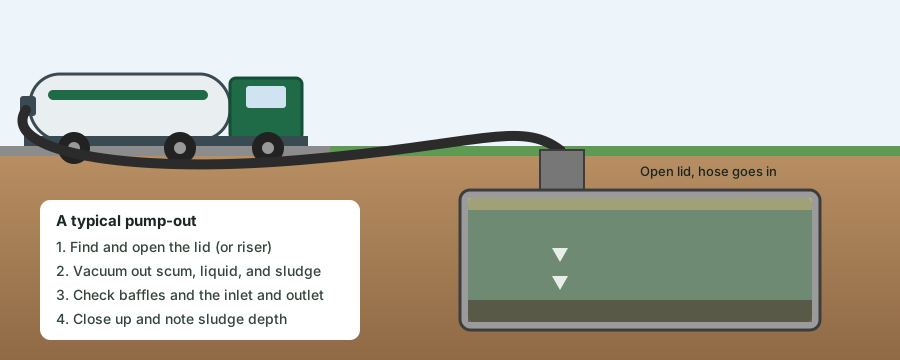
Every pump-out includes
Locating the tank
From the sewer cleanout, old records, or probing. Digging buried lids is priced separately and agreed on first.
Pumping every compartment
Two-compartment tanks need both sides pumped. Skipping the second side is a common shortcut that you shouldn't accept.
Baffle and filter check
Broken or missing baffles let solids reach the drain field. Effluent filters get cleaned.
Written summary
Tank size, sludge depth, condition notes, and a suggested next pumping date for your records.
How often you need it
The interval depends on tank size and household size more than anything else. Use this as a starting point, then adjust based on what the sludge level shows at your first pump-out.
| Tank size | 1 to 2 people | 3 to 4 people | 5 to 6 people |
|---|---|---|---|
| 750 gallons | Every 4 to 6 years | Every 2 to 3 years | Every 1 to 2 years |
| 1,000 gallons | Every 5 to 8 years | Every 3 to 4 years | Every 2 to 3 years |
| 1,250 gallons | Every 6 to 10 years | Every 4 to 5 years | Every 3 to 4 years |
| 1,500 gallons | Every 8 to 12 years | Every 5 to 6 years | Every 3 to 5 years |
Rough guide for full-time homes. A garbage disposal, a water softener that backwashes into the tank, or heavy laundry use all shorten the interval. Seasonal cabins usually stretch it.
Before the truck arrives
Clear a path. Pump trucks are heavy. The truck needs to get within hose reach of the tank without driving over the drain field, the tank itself, or soft lawn. Tell us about gates, steep driveways, or low branches when you book.
Mark the lid if you know where it is. A flag or a stake saves time and money. If you have an old pumping receipt or a permit drawing, have it handy.
Go easy on water that morning. Skip laundry and long showers right before the visit so the crew isn't pumping fresh water.
Keep pets inside. Open tank lids are a hazard for dogs and kids.
After the pump-out
Use water normally. The tank refills with household water over the following days and weeks, which is how it's supposed to work. You don't need to add yeast, enzymes, or any other additive to "restart" it.
Keep the summary with your house records. If you sell the home, buyers and inspectors will ask when the tank was last pumped.
Buried lids and digging
Many older Flathead Valley tanks have lids one to three feet underground. Digging them up adds time and cost every single visit, and it's much harder in winter. If your lids are buried, ask about a riser at the same visit: it brings the lid to ground level so future pump-outs skip the shovel.
Pricing
Most 1,000 gallon tanks run about $350 to $600 to pump. Larger tanks, long hose runs, and digging add to that. You'll get the price before the truck is dispatched, and the invoice matches what you agreed to.
Pumping questions
How often should I pump my septic tank?
Most full-time households pump every 3 to 5 years. The real answer depends on tank size and how many people live there; the chart above is a good starting point. If you don't know when it was last pumped, assume it's due.
How much does septic pumping cost in Kalispell?
A standard 1,000 gallon tank usually runs about $350 to $600. Larger tanks, long hose runs, and buried lids that need digging add to that. You'll get a firm price before the truck comes out.
How do I find my septic tank lid?
Start where the main sewer line leaves the house, usually in the basement or crawlspace, and look 10 to 20 feet out in that direction. Old permit records, a past pumping receipt, or a soft spot or bare patch in the lawn can help. The crew can locate it if you can't.
Can you pump in winter?
Yes. Frozen ground and snow make buried lids harder to reach, which can add digging time and cost. If your lid is buried, a riser makes winter service much easier.
What should I do before the truck arrives?
Make sure the truck can get within about 100 feet of the tank, mark the lid if you know where it is, keep pets inside, and avoid heavy water use like laundry right before the visit.
Do I need to be home?
Not always. If the lids are accessible and the gate is open, many pump-outs can be done while you're at work. You'll get a summary and receipt afterward.
Ready to get your tank pumped?
Call, text, or send the form. You'll get a price before anyone shows up.